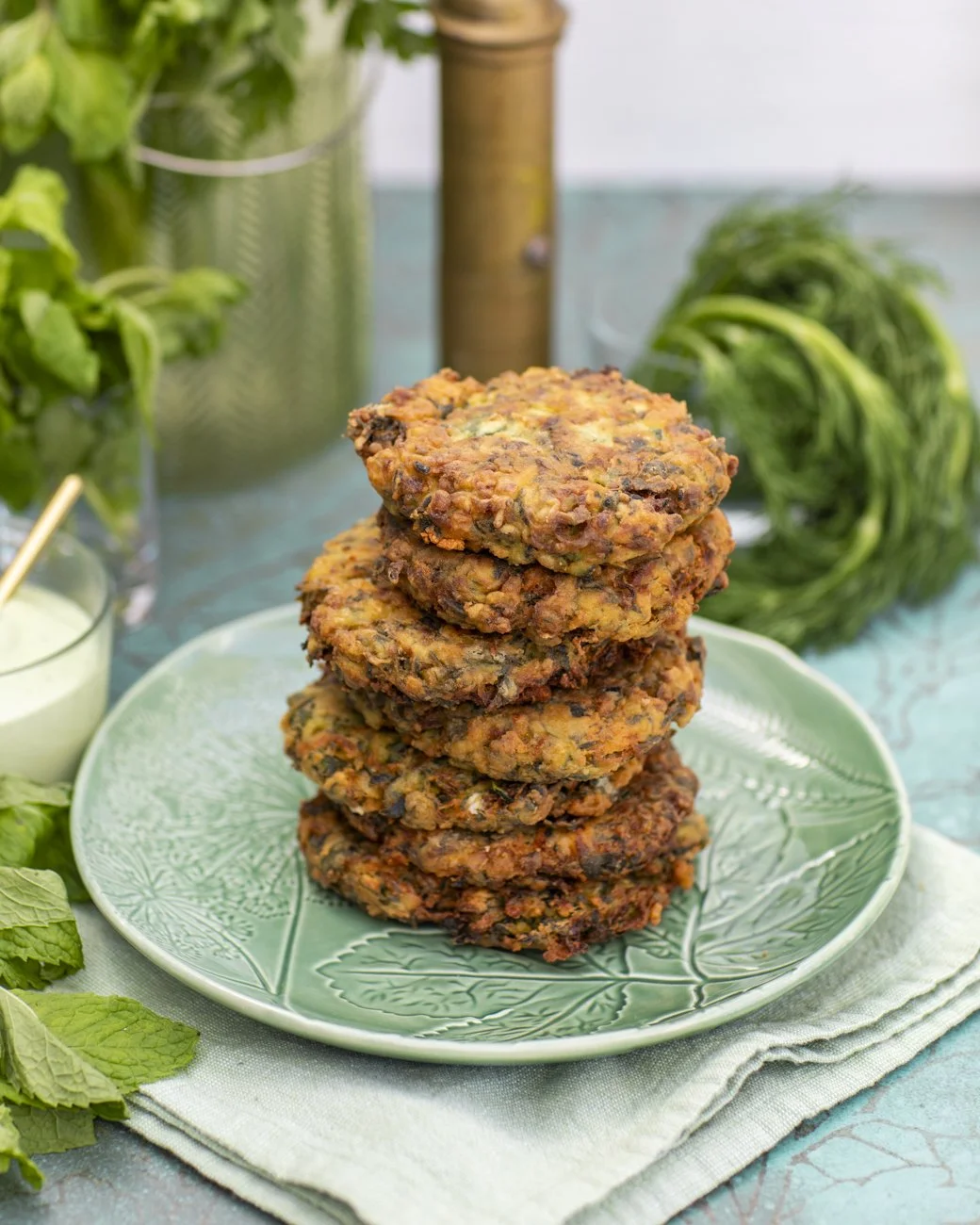
I am sure that many of your mothers and grandmothers are renowned for famous family dishes that they have no written recipe for. “A pinch of this, a bit of that, throw in an egg, mix it together, and that’s that”. My mother is no exception. When I first began the journey of documenting her recipes, this irritated me immensely. You would often find me sitting frustrated in her kitchen rolling my eyes “What do you mean you DON’T KNOW how much flour you add?” I have spent an abnormal amount of time cooking in my kitchen over the last decade, playing around with my mum’s recipes, cooking from my favourite cookbooks, and developing recipes for many clients. In that time I have come to realise that written recipes are not always Gospel. I used to think that mum was crazy for her lack of precise recipes, I now understand that patience, common sense, experience (and a recipe to inspire or guide you) often make for a much better end result.
Our mothers and grandmothers often don’t have precise recipes for their traditional dishes because it doesn’t always make sense to. Great cooks like my Mother work by feel and taste, and by understanding the ingredients they are cooking with. When you are cooking with an ingredient like zucchini that has varying levels of moisture, you can’t follow a recipe exactly and expect the same results every time. Rather, you have to understand the texture and moisture of the particular zucchini you are working with, and then use the other ingredients, like the crumbs and flour, to balance the moisture out.
My recipe for Kolokithokeftedes, or Greek Zucchini Fritters, should not be followed as Gospel. Rather it should be used as a guide. Focus instead on the feel of the mixture between your fingers, the speed at which your fritters start sizzling when they hit the pan, and the way they spread or hold their shape when doing so. When you start to really understand your ingredients, the results can be magical!
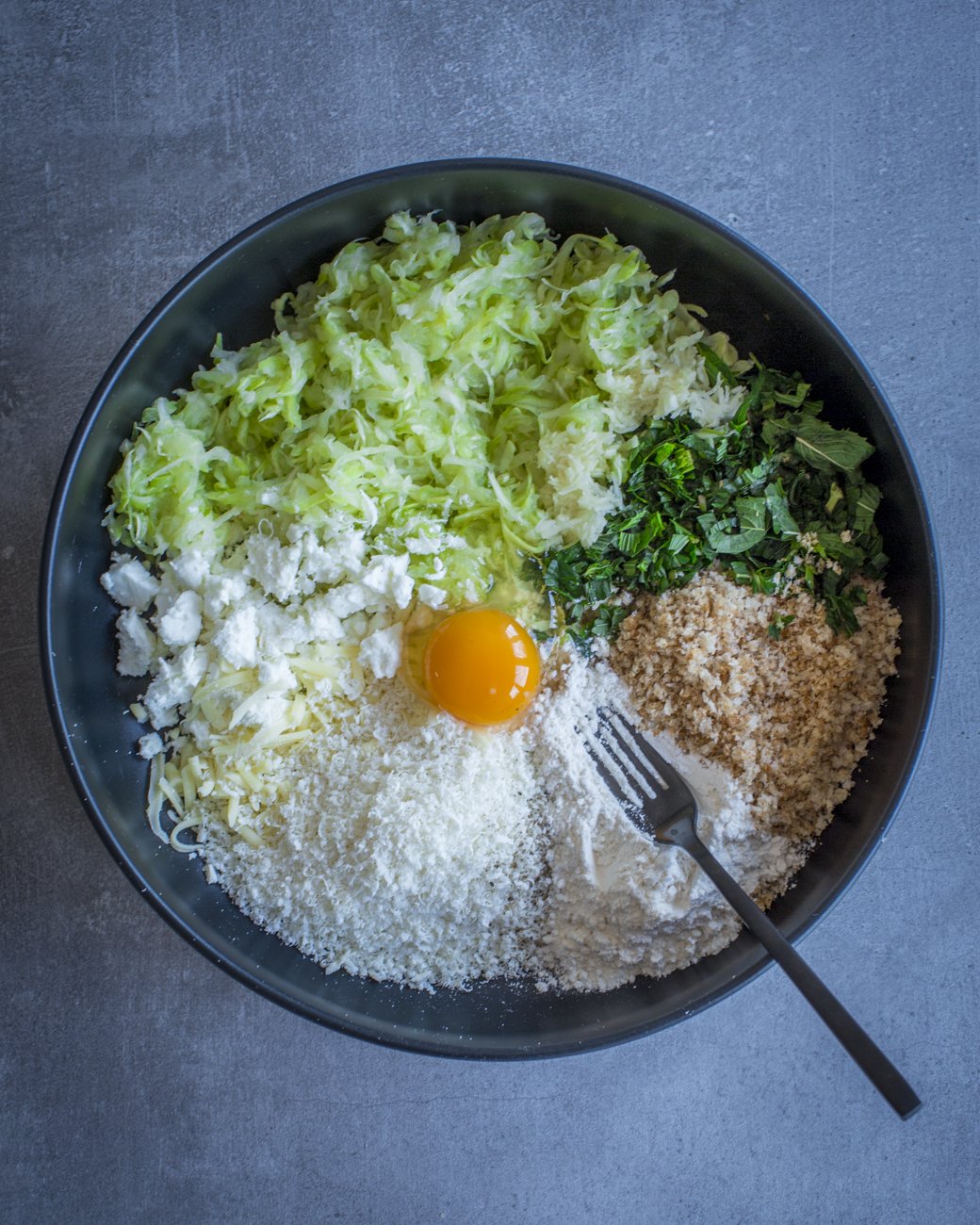
Kolokithokeftedes are traditionally made with feta cheese, but I often add another type of cheese for extra flavour. I’ve included parmesan in the recipe below, but feel free to omit it or add other cheeses that you love. Some of my other favourites are Kefalograviera cheese or Mizithra cheese.
I make these as an appetiser for get togethers, as a snack for the kids, and I also love adding them to wraps or sandwiches with lots of other delicious things.
INGREDIENTS FOR KOLOKITHOKEFTEDES
Makes 12 medium sized fritters or 24 small ones
3 cups firmly packed coarsely grated zucchini (approximately 6 medium sized zucchinis)
1 heaped tablespoon salt
1 medium sized red onion, finely diced
½ cup finely chopped parsley
2/3 cup finely chopped mint
1 heaped tablespoon chopped dill
1 large clove garlic, finely minced
120 grams Feta cheese, crumbled
50 grams finely grated parmesan cheese
Cracked pepper to taste
1 egg
1 tablespoon plain flour
1 cup breadcrumbs
For frying
1 cup of plain flour
live oil
To serve
Greek yoghurt for dipping
INSTRUCTIONS FOR MAKING KOLOKITHOKEFTEDES
1. Place the grated zucchini in a colander. Sprinkle with salt and mix through so the zucchini is coated in the salt. The point of doing this is to extract as much liquid as possible out of the zucchinis, which will make for crispier fritters. If you have the time, allow this to drain for 2-3 hours, or even overnight. If not, allow it to drain for at least 10minutes.
2. Using your hands, squeeze as much liquid out of the zucchini as possible. Place the drained zucchini in a large bowl.
3. Add the remaining ingredients into the bowl. Using your hands, mix the ingredients until they are well combined. The mixture should have a relatively wet feel to it, but not so wet that it all sticks to your hands. If it is too wet, add some more flour, one tablespoon at a time. Don’t be too tempted to add too much flour, as they will become stodgy.
4. Place the flour on a flat plate. Place a heaped tablespoon of mixture onto the plate of flour and gently roll it in the flour, so it is liberally coated. You need to ensure that the fritters are well coated in flour, if not they will break apart when you try and fry them. Place on a clean plate. Repeat the process until all the mixture is used.
5. Place the oil in a medium sized frying pan, using enough to completely coat the base, approximately 0.5cm in height of oil. Place the pan on the medium heat setting of your stove, and allow the oil to heat for a minute.
6. Place the fritters in the frying pan, allowing ample space between them. Allow them to cook for three minutes on one side, flip them over, and using the back of a spoon gently press them down a little. Cook for a further three minutes, or until they are golden brown. The oil should be sizzling slowly as you cook them, so that the golden colour develops gradually. If they are browning too quickly, reduce the heat.
7. Remove them from the pan and drain on paper towel
8. If your oil is very dirty from the excess flour, or almost used up, wipe the pan clean with paper towel and refill with clean oil to cook the remaining fritters.
9. I think these are best eaten at room temperature, rather than hot from the pan, so allow them to cool slightly before serving. I love dipping mine in yoghurt, or making a vegetarian burger or wrap with them. Enjoy!